

HN Summary
• Lawson Research Institute has unveiled Canada’s first Siemens BIOGRAPH One PET/MRI scanner, offering researchers unprecedented imaging power to study diseases at the cellular level.
• The $8-million research-dedicated scanner combines advanced PET and MRI technology to accelerate research into cancer, chronic pain, mental health, cardiovascular disease and inflammatory conditions.
• Supported by a $65.75-million investment from the Workplace Safety and Insurance Board, the technology will advance workplace injury research and help improve the diagnosis and treatment of complex diseases.
If you were to travel deep inside the human body, you would be able to see the hum of activity inside each tiny cell and the electrical conversation between them. You could visualize miniscule details of the soft tissue that makes you, you.
You could detect microbleeds in the brain after a stroke, cancer before it metastasizes, and even the chemical processes in the brain that distinguish depression from bipolar disorder. You could view musculoskeletal injury before it turns to chronic pain and understand what triggers inflammation and neuroinflammatory diseases
While it may sound like an episode of The Magic School Bus, you don’t need Miss Frizzle or a miniature mode of transportation to get there – you “just” need a team of highly qualified professionals and a PET/MRI imaging scanner.
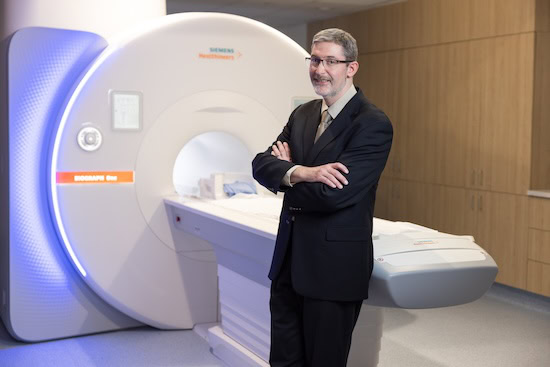
Researchers are seeing the human body more clearly than ever, thanks to a transformative new imaging technology at Lawson Research Institute (Lawson) of St. Joseph’s Health Care London (St. Joseph’s).
This first-in-Canada Siemens BIOGRAPH One PET/MRI scanner unveiled in June 2026 combines two imaging technologies with more detection power and sensitivity than any previous machine (PET is short for positron emission tomography, and MRI is magnetic resonance imaging – both the gold standard in advanced imaging).

With its rhythmic whoosh-whoosh while at rest, and a cacophony of clunks, clicks and beeps while at work, this $8-million machine enables discovery that until now has been the domain of science-fiction writers and dreamers.
“We are going to combine MRI and PET in never-before-seen ways to transform the way we diagnose and treat patients,” says St. Joseph’s Lawson scientist Jean Théberge, PhD, certified clinical Medical Physicist specialized in MRI.
Lawson was first in Canada, in 2012, to embrace PET/MRI technology at St. Joseph’s Hospital.
• As a research tool, the PET/MRI allows for faster, more accurate understanding and diagnoses of:
• Chronic pain and musculoskeletal Injury
• Mental health and brain-behaviour pathways
• Cardiovascular disease
• Inflammation and neuroinflammation diseases
• Cancer
St. Joseph’s is a world leader in imaging research and discovery, with numerous health care “firsts”. As Canada’s first centre of excellence in molecular imaging and theranostics, St. Joseph’s has the technology, expertise, training and scientific research support that sparks innovation and translates to improved patient care.
Customized radiotracers used in PET/MRI scans to detect different diseases are also created in-house at Lawson’s Nordal Cyclotron & PET Radiochemistry Facility. Says Théberge, “Not only do we have a strong history of work in our facility, we can also develop new tracers with the same rigor, and similar process, as you develop something like a pharmaceutical drug.”
“The human cost of workplace injury is enormous,” says Jeff Lang, WSIB President and CEO. “We’re proud to invest in research that transforms how we diagnose and treat workplace injuries and illness for Ontarians – and this PET/MRI enables some of that game-changing work to take place.”
Acquiring the BIOGRAPH One PET/MRI was made possible through a $65.75-million investment from the Workplace Safety and Insurance Board (WSIB), in partnership with the WorkSafe Ontario Fund.
The landmark investment launched Lawson’s game-changing Workplace Injury Research Network, which brings people, technology and science-backed innovation together to solve occupational injury and illness. Through this work, the PET/MRI will enable research into rapid and accurate diagnostics of mental health disorders, chronic pain, musculoskeletal conditions and more.
This investment from the WSIB is just one example of how donor and partnership support enable groundbreaking research at St. Joseph’s. “Having technology like the new PET/MRI here at Lawson simply would not be possible without the generosity of partners like the WSIB,” says St. Joseph’s Health Care Foundation President and CEO Michelle Campbell. “This investment will pioneer medical advancements to help create better health care and a healthier community as a result.” nH
Emily Mackie works in communications at St. Joseph’s Health Care London.