

Cancer care is entering a new era—one driven by robotics, artificial intelligence, precision diagnostics and groundbreaking research. At Vancouver General Hospital (VGH), those advances are already changing how patients are diagnosed, treated and cared for.
Backed by more than $39 million raised through the VGH & UBC Hospital Foundation’s Greater Than Cancer campaign, the hospital is expanding access to cutting-edge technologies and research designed to improve outcomes while meeting the growing demand for cancer services across British Columbia.
With more than 30,000 British Columbians expected to be diagnosed with cancer this year, VGH continues to play a critical role in the province’s cancer care system. As one of B.C.’s largest and most specialized hospitals, it treats many of the province’s most complex cancers, including brain, spine, gynecologic, abdominal and ocular tumours. It is also home to British Columbia’s only adult Leukemia and Bone Marrow Transplant Program, with more than half of its cancer patients referred from outside the Vancouver Coastal Health region for specialized care.
Robotics improving cancer treatment
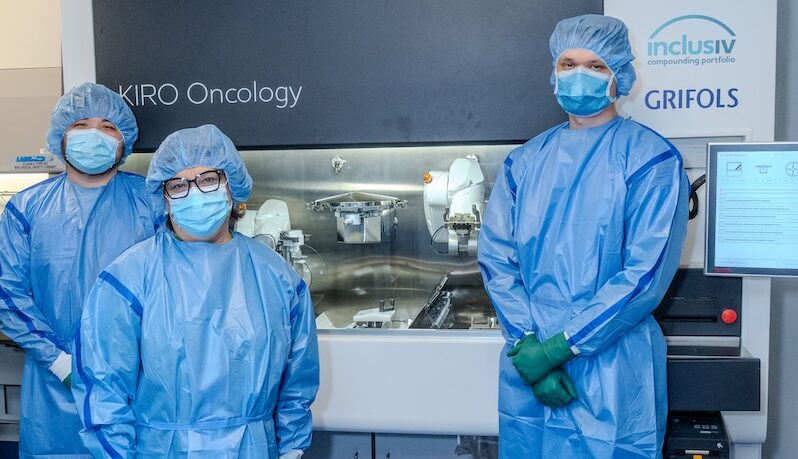
Among the campaign’s most significant investments is the introduction of Canada’s first KIRO Oncology Chemotherapy Robots.
Installed in VGH’s pharmacy, the dual robotic-arm system automates the preparation of hazardous chemotherapy medications with remarkable precision. Barcode verification ensures every step of the compounding process is accurate while reducing occupational exposure for pharmacy staff who routinely work with toxic drugs.
The technology can prepare up to 12 medications simultaneously and increases chemotherapy preparation capacity by as much as 30 per cent. Together with manual compounding, the two robots will support the preparation of approximately 26,600 intravenous chemotherapy doses annually, helping ensure patients receive life-saving treatment as quickly as possible.
Faster diagnoses through automation
The Greater Than Cancer campaign is also modernizing one of Western Canada’s busiest pathology laboratories.
VGH has become one of the first hospitals in Canada to implement two advanced automated pathology systems: the Auto Facing Device and the Auto Slide Preparation System. These technologies automate many of the repetitive tasks involved in preparing tissue samples for diagnosis.
The impact is significant. Slide preparation capacity increases from approximately 50 slides per hour to more than 400, while turnaround times are reduced from days to just hours for many specimens.
By the end of 2026, hospital leaders estimate the automated systems will perform roughly half of all routine pathology preparation, allowing highly skilled laboratory technologists to focus on more complex diagnostic work. Faster pathology results mean patients receive answers sooner and can begin treatment earlier.
New technologies across the cancer journey
Innovation extends well beyond the laboratory.
The campaign has funded several advanced clinical technologies that support patients throughout every stage of cancer care.
A photon-counting CT scanner, introduced in VGH’s Emergency Department in 2025, delivers exceptionally detailed imaging that can detect cancers earlier while also improving diagnosis for stroke, trauma and cardiac patients.
For patients requiring spinal surgery, the Mazor Spine Robot provides three-dimensional guidance that allows surgeons to perform minimally invasive procedures with greater precision, reducing pain and shortening recovery times.
Together, these technologies are helping clinicians deliver more accurate diagnoses and increasingly personalized care.
Research creating tomorrow’s treatments
Technology is only one part of the story.
The campaign is also accelerating research that could shape the future of cancer care worldwide.
VGH’s Hematology Research Unit has become British Columbia’s first inpatient clinical trials unit dedicated to early-phase blood cancer therapies. Patients with few remaining treatment options now have access to first-in-human clinical trials and advanced therapies, including CAR T-cell treatment.
Researchers are also building on internationally recognized work in ovarian cancer prevention. Pioneered at VGH, opportunistic salpingectomy—the removal of the fallopian tubes during routine surgery—has been shown to reduce the most aggressive ovarian cancers by nearly 80 per cent. The approach is now recommended in 24 countries and continues to expand throughout British Columbia.
Building capacity for the future
As Canada’s population grows and ages, hospitals face increasing pressure to deliver more cancer care without compromising quality or access.
The investments made through the Greater Than Cancer campaign reflect a broader shift toward smarter, technology-enabled care. Robotics are reducing manual workloads. Automation is shortening diagnostic timelines. Clinical research is bringing innovative therapies to patients sooner.
While each innovation offers meaningful benefits on its own, together they represent something much larger: a coordinated effort to transform every stage of the cancer journey—from diagnosis and treatment to research and recovery.
For patients across British Columbia and beyond, that means faster answers, safer treatments and greater access to some of the most advanced cancer care available anywhere in Canada.