

HN Summary
• William Osler Health System and the University of Toronto Centre for Healthcare Engineering have launched Ontario’s first Human Factors Academic Practice Partnership, bringing engineering students together with frontline clinicians to improve patient safety and quality of care.
• The partnership applies human factors engineering to real-world healthcare challenges, including reducing missed diagnostic imaging appointments and improving surgical workflows.
• Hospital leaders say integrating human factors into quality improvement initiatives is helping create safer, more efficient and patient-centred healthcare systems while giving students valuable hands-on experience.
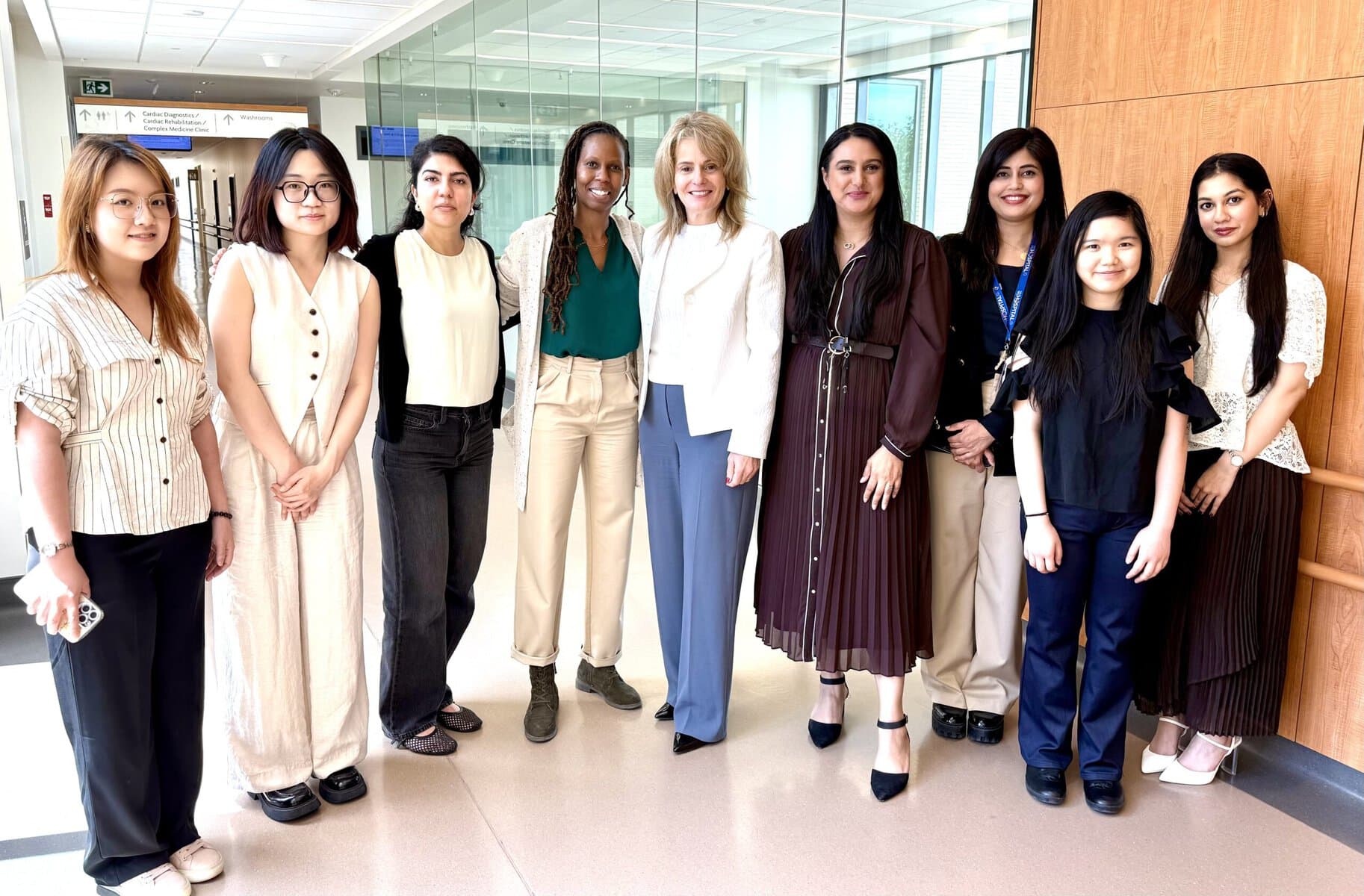
A year into their groundbreaking Academic Practice Partnership (APP), William Osler Health System (Osler) and the University of Toronto’s (U of T) Centre for Healthcare Engineering (CHE) are reaping the benefits of integrating human factors thinking into the way people work and deliver care. Launched in April 2025, the Osler-U of T Human Factors APP is the first of its kind in Ontario to bring together Mechanical and Industrial Engineering students with frontline Osler clinicians.
“To date, 16 undergraduate, graduate, and postdoctoral research trainees have contributed to collaborative William Osler Health System – U of T research initiatives across clinical programs, applying co-designed approaches that integrate human factors, quality improvement, and systems thinking methodologies,” said Komal Mazhar, Director, Quality, Risk and Business Continuity, William Osler Health System. “It’s been truly inspiring to witness the cross-collaboration between student researchers and Osler clinicians in their shared pursuit of advancing high-quality, safe and efficient care.”
“Our trainees are excited about the opportunity to work in health care,” said Dr. Myrtede Alfred, Assistant Professor, Industrial Engineering, University of Toronto. “The collaborative projects offered through the APP provide a great opportunity for trainees to gain valuable experience working with clinicians and cultivate the human factors skills needed to contribute to meaningful change in healthcare environments.”
Human factors analysis specifically explores the relationships and processes between humans, tools and equipment in clinical settings and how it impacts patients and those providing care. Applying human factors analysis in health care settings has been shown to lead to quality and safety improvements including increasing delivery of evidence-based care, improving patient communication, minimizing clinical errors, and reducing inefficiencies.
Many of Osler’s projects originate with team members who have completed Osler’s QI Academy, a professional development opportunity that equips clinical educators, clinical leaders professional practice leaders and frontline staff and physicians to lead and sustain quality improvement projects within their respective clinical settings.
“The APP enables Osler team members to partner with students to co-develop evidenced informed solutions to real-world challenges in health care,” said Mazhar. “It’s a win-win collaboration for both health care and academia.”
Two of the student researchers recently had the opportunity to present on their respective projects at the 15th International Symposium on Human Factors and Ergonomics in Health Care in New York, an event that focuses on the latest insights, best practices and innovations that improve safety for patients and health care providers.
“Those two research projects are prime examples of how we’re applying this body of knowledge and expertise in human factors engineering to advance quality improvement initiatives identified by our team members,” said Mazhar. “One project is examining the key contributors to patient no-show visits in diagnostic imaging, and the other is seeking to optimize perioperative workflow to enhance patient care and operational efficiency.”
As demand for health-care services continues to grow, hospitals are focused on improving access and ensuring resources are used as effectively as possible. Opportunities exist to reduce missed diagnostic imaging appointments helping to minimize delays, improve patient flow and enhance the overall care experience for patients and families. One project is benefitting from the insights of a post doctoral student, and the other from a Masters-level student.
With several human factors projects well underway and more on the horizon, Osler in partnership with Centre for Healthcare Engineering has offered Human Factors workshop to clinical leaders and is currently creating a dedicated Human Factors module in its QI Academy for those who have already graduated from the program to further advance their knowledge as to how human factors can be integrated into quality improvement initiatives.
Tiziana Rivera, Executive Vice President, Quality, Research and Chief Nursing Executive at Osler, believes the Osler–University of Toronto Academic Practice Partnership demonstrates the transformative potential of bringing academic inquiry and frontline care delivery together to reimagine safer, higher-quality health systems.
“As Osler advances its journey toward becoming a High Reliability Organization, we recognize that achieving sustained excellence in quality and safety requires more than process improvement alone,” said Rivera. Embedding human factors principles into the design of care, workflows, and systems enables us to build more resilient, efficient, and patient-centred processes. Through this partnership, we are creating the conditions for innovation and evidence-informed practice to translate into meaningful improvements for patients, families, and care teams across the organization.”
Mazhar is excited by the growing possibilities that exist for clinicians and students to work together to drive processes that improve quality, safety, care and patient outcomes while also improving the provider experience.