

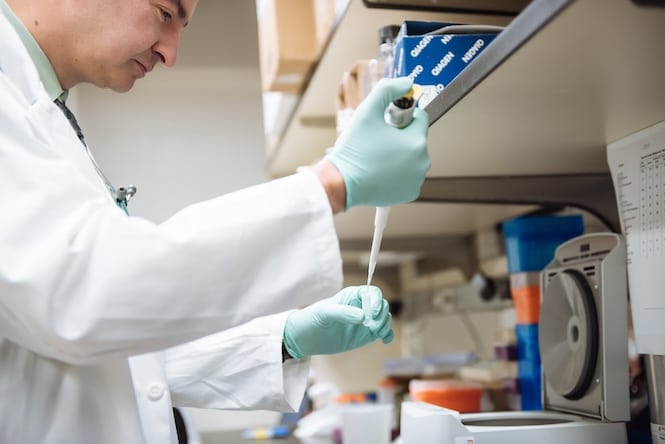
Survival rates of childhood cancer have improved significantly over the past several decades due largely to pediatric cancer research. Understanding the definition of pediatric cancer research, its importance and statistics may help explain why organizations such as Four Diamonds continue supporting more than 90 research professionals focused on improving outcomes for children with cancer.
What Is Pediatric Oncology Research?
Organizations like Four Diamonds are leaders in funding pediatric oncology research or childhood cancer research, which is the scientific and clinical study of cancers affecting infants, children and adolescents under 19 years old. The field examines how childhood cancers develop, how they respond to treatment and how long-term outcomes can be improved.
The importance of pediatric cancer research lies in the fact that childhood cancers differ significantly from adult cancers. According to Four Diamonds, “Pediatric cancers aren’t simply smaller versions of adult cancers. They stem from different causes and often lack early detection methods. Most childhood cancers are not linked to lifestyle or environmental factors, and they require specialized treatment protocols.”
Due to these differences, researchers need to develop therapies specifically for children rather than adapting adult treatments. Children’s bodies and immune systems are developing, so treatments must be studied carefully to improve survival while limiting long-term harm.
Why Is Pediatric Oncology Research Important?
Pediatric oncology research continues to improve outcomes for children with cancer in the following ways.
Advancing Survival Outcomes in Childhood Cancer
Research has fundamentally changed survival outcomes for children diagnosed with cancer. In the 1970s, only around 58% of children diagnosed with cancer survived five years or more. Today, that number has risen to about 85%, largely due to decades of clinical research, collaborative care models and improvements in treatment protocols.
Progress has been significant in diseases such as acute lymphoblastic leukemia. “Even children with acute lymphoblastic leukemia, the most common childhood cancer, have seen a higher rate of survivorship — a 35% increase over five years,” Four Diamonds noted.
Despite these gains, childhood cancers remain among the leading causes of disease-related death among American children. Approximately 9,680 children in the country are expected to be diagnosed with cancer in 2026. This means that there is a continued need for investment in pediatric oncology research.
Driving Safer and More Precise Treatment
Research has contributed to the development of treatments that are both more precise and less damaging to healthy tissue. Instead of depending solely on aggressive chemotherapy and radiation, researchers are developing therapies that target cancer cells more selectively. Immunotherapy, for example, is more effective and less harmful to the surrounding cells.
Pediatric oncology research is also accelerating the development of treatments for children and young adults with relapsed or treatment-resistant cancers. “Researchers from the Beat Childhood Cancer Research Consortium (BCC) are teaming up with Aminex Therapeutics on a new national study to test a promising treatment for kids and young adults whose cancers have come back or do not respond to standard treatment,” Four Diamonds stated in 2025. “The study will include more than 220 patients at up to 50 clinics across the United States.”
Protecting Quality of Life After Treatment
Surviving cancer does not always mean life goes back to normal. Many childhood cancer survivors continue to experience long-term complications caused by the disease or intensive therapies received during critical stages of development. These effects may include fertility problems, heart disease, cognitive difficulties, emotional distress, impaired growth, an increased risk of developing secondary cancer in life and a lower quality of life overall.
For this reason, survivorship research has become a priority in childhood oncology. Researchers are examining how treatments can be adjusted to reduce long-term harm while maintaining effectiveness against cancer.
How Does Dedicated Funding Contribute to Pediatric Cancer Research?
Childhood cancer is technically rare, and this low diagnosis rate has caused funding to suffer. Only 4% of federal funding goes toward childhood cancer research.
Research funding from organizations like Four Diamonds is therefore important to help sustain progress. Long-term studies, clinical trials, specialized equipment and multidisciplinary care teams require ongoing financial support. Without dedicated funding sources, many research initiatives would struggle to continue.
Where Hope Meets Progress
Children require therapies tailored to their needs and long-term well-being. Through research partnerships, clinical innovation and family-centered support, Four Diamonds and other pediatric cancer organizations continue to be a major part of advancing care.